
Property Cleared. Burden Lifted. Family Supported.

Estate Stewardship Services

Estate Property Clearing, Documentation & Stewardship

Restoring Order to Complex Estate Properties

Discreet, owner-led assistance for executors, trustees, attorneys, fiduciaries, and families responsible for inherited, vacant, neglected, cluttered, or multi-structure properties.

Estate Stewardship Services documents, clears, stabilizes, and coordinates the interior and exterior needs of homes, land, barns, and outbuildings—providing one accountable point of contact from the initial property review through final completion.

Veteran-Owned Founder-Led Professional References Shared Selectively Insurance Verification Available

Serving Greater Cincinnati, Northern Kentucky, Southeast Indiana, Southeast and Central Kentucky.

Clear the Burden. Protect the Value.

Review Before Removal

Retained Items, Documents & Apparent Value.

Important documents, family-significant items, retained property, and apparent valuables are separated for authorized review before ordinary removal begins.

Useful Records

Photo-Supported Project Documentation.

Useful notes and photos help decision-makers understand what was reviewed, what was retained, and how the property moved forward.

Professional Coordination

Clear Communication for Authorized Parties.

Property owners, heirs, executors, trustees, attorneys, agents, and authorized representatives receive a clear communication path.

Whole Property Support

House, Barn, Garage, Outbuildings & Land.

Barns, sheds, detached garages, equipment areas, and rural acreage are addressed with the same discipline as the main residence.

Direct Answer

What Does Estate Stewardship Services Do?


Estate Stewardship Services is a veteran-owned property stewardship firm serving Greater Cincinnati, Northern and Central Kentucky, and Southeast Indiana. It clears, documents, and stabilizes estate, rural, and multi-structure properties — houses, barns, outbuildings, and land — for owners, heirs, executors, trustees, attorneys, and real estate professionals.

The purpose is not simply to empty a property. It is to reduce confusion, protect items that may need review, restore access, support responsible decisions, and move the property toward its next family, legal, practical, or market step. Work includes retained-item separation, outbuilding review, stabilization, land-clearing support, photo-supported documentation, and listing-readiness preparation.

Founder-Led Experience

Who Stands Behind This Work?

Estate Stewardship Services is new by name, but it is not led by someone new to the weight of caring for a family property. Edwin R. Shackelford was raised in Breathitt County, Kentucky, by grandparents who taught him that your word is your bond, and he brings that standard, backed by three decades of senior property and construction leadership, to rural and semi-rural property transitions.

Measured Authority

Mountain Discipline, Applied to the Family Property.

This is not a résumé pasted onto a property-services page. Edwin was raised from age twelve by his grandparents: a railroad depot agent who lost his sight in an accident and never let it become an excuse, and a schoolteacher who rode a mule sidesaddle into the mountains to teach in a one-room schoolhouse. That upbringing is the operating reason Estate Stewardship Services is built around intake, sequencing, documentation, communication, discretion, field judgment, and accountable handoff.

For many families, the property is not just a house. It is the home place, the barn, the garage, the tool room, the documents, the memories, the land, and the burden no one person is fully prepared to carry alone.

  • Three Decades of Senior Leadership
  • Construction Management Background
  • Civil Engineering Study
  • Veteran-Owned Family Values
  • Rural Property Understanding
  • Documentation-First Process
Firsthand Ownership Perspective

A Property Owner With Firsthand Stewardship Experience

Edwin R. Shackelford brings three decades of senior property and construction leadership, along with firsthand experience as a farm owner in Kentucky and Tennessee. That ownership perspective informs the practical judgment, discretion, documentation, and long-term stewardship applied to every property engagement — the difference between advising on rural property from theory and understanding it from lived responsibility.

References & Insurance Verification

Verifiable Reference Profiles and Insurance Credentials Are Available for Review.

Edwin's professional reference profiles help serious prospects understand the substance behind his background: documentation standards, owner communication, sequencing discipline, field judgment, vendor coordination, problem resolution, and accountable handoff. Insurance documentation is handled with the same seriousness and is available to legitimate property owners, executors, trustees, attorneys, fiduciaries, and authorized representatives as part of the confidential review and scope process.

Documentation Standards Owner Communication Sequencing Discipline Field Judgment Insurance Verification Farm & Rural Property Owner Accountable Handoff

General Liability

Coverage up to $5M for qualifying property-transition work, subject to policy terms, conditions, and scope.

Workers' Compensation

Applicable workers' compensation coverage is maintained for crew-related exposure as required for the work being performed.

Commercial Auto

Vehicle-related coverage supports projects involving trucks, trailers, hauling, travel, access, and project logistics.

Equipment Coverage

Equipment-related insurance is maintained as required for tools, equipment, and field operations used in appropriate scopes of work.

Neither reference profiles nor insurance documentation are published as a public curiosity. For serious property owners, executors, trustees, attorneys, agents, fiduciaries, and authorized representatives, both are available together as part of the confidential review and scope process, before work begins.

When to Call

When Should You Call Someone About a Family Property?

The need is usually practical before it is emotional: too much volume, too many structures, too many unknowns, too little time, or too much distance between the decision-maker and the property. And an unresolved property creates risk every day it sits unsecured, unsorted, or unmarketable.

  • The house, basement, garage, or barn is full and no one knows where to start.
  • The property includes sheds, workshops, outbuildings, equipment, tools, or stored contents that need review.
  • The driveway, yard, fence line, or building access is grown up, blocked, or difficult to reach safely.
  • The property is vacant, neglected, inherited, or emotionally difficult for the family to process.
  • The realtor cannot list it, the inspector cannot access it, or the family cannot make the next decision yet.
  • There may be documents, retained items, family property, tools, valuables, or sensitive materials that should not be casually discarded.

The Decision-Maker Has to Protect the Whole Property.

Estate and family properties often hold financial records, legal documents, heirlooms, tools, valuables, medication, firearms, restricted materials, and ordinary household contents in the same space. A vulnerable property can invite damage, theft, disputes, missed documents, unplanned expenses, insurance concerns, contractor-access problems, and delays to sale or transfer.

Not Just Probate

This Service Is for Property Burden, Not One Narrow Legal Situation.

Many clients call after a death in the family. Others call while a parent is downsizing, a rural property is being prepared for sale, a farmstead has accumulated years of contents, an outbuilding has become unsafe to access, or a family property needs to be cleared before the next decision can be made.

Core Services

A Documented Path From Disorder to Disposition.

Every property is different, but the operating discipline stays consistent: identify what matters, protect what must be preserved, clear what can responsibly move, and prepare the property for the next decision.

  1. Review Before Removal

    Retained-Item, Document & Apparent-Value Separation

    Documents, family-significant items, records, tools, apparent valuables, and other retained items are separated for authorized review before ordinary removal begins.

    Key Actions
    • Review access, instructions, and retained-item priorities.
    • Separate documents, records, photographs, tools, and apparent valuables.
    • Create a protected holding area for authorized review.

    Phase Outcome: Important and retained items are protected before general clearing begins.

  2. Controlled Clearing

    Property Clearing & Stabilization

    Household contents, debris, abandoned items, and non-retained property are removed through a structured process focused on access, safety, documentation, and responsible routing.

    Key Actions
    • Establish safe access routes and controlled working areas.
    • Remove non-retained contents, debris, and abandoned materials.
    • Route donation, recycling, disposal, and specialty items responsibly.

    Phase Outcome: The property becomes safer, more accessible, and easier to evaluate.

  3. Listing Readiness

    Listing Readiness & Sale Preparation

    The property is prepared for agents, appraisers, inspectors, contractors, buyers, family walkthroughs, sale, transfer, or the next practical decision.

    Key Actions
    • Prepare primary spaces for walkthroughs, appraisal, and inspection.
    • Coordinate remaining repairs, site work, or specialty vendors.
    • Support listing, transfer, sale, or the family’s next decision.

    Phase Outcome: Decision-makers receive a property prepared for its next responsible use.

Dedicated Field Capability

Who Handles Overgrowth, Barns, and Neglected Outbuildings?

Some properties require more than interior clearing. The land, access, structures, exterior debris, equipment areas, vegetation, and outbuildings may all affect whether the property can be safely reviewed, listed, transferred, sold, repaired, or stabilized.

Estate Stewardship Services provides dedicated crew support for demanding property-recovery situations involving grown-up vegetation, accumulated trash, abandoned equipment, blocked access, failing sheds, deteriorated barns, and outbuildings that may need clearing, stabilization, or demolition coordination where appropriate. This service exists because rural property owners and families repeatedly identify these exterior and multi-structure issues as some of the biggest barriers to moving a property forward.

This work is handled in-house, by our own family-led crews and equipment, rather than outsourced to a subcontractor — sparing the executor, trustee, or responsible family member the extra step of finding someone else to do it.

Who & What We Serve

Who Is This Service For?

Broad enough for rural property owners, focused enough for estate, legal, and real estate situations where documentation and discretion matter.

The People

Property Owners & Rural Families

Owners, aging homeowners, landowners, farm families, and adult children helping parents with a property that has become too much.

The People

Heirs, Executors & Trustees

Inherited, estate, vacant, cluttered, or multi-structure properties where the authorized decision-maker needs a documented path forward.

The People

Attorneys, Fiduciaries & Representatives

Legal or fiduciary teams that need practical property support for complex or urgent property conditions.

The People

Agents & Property Professionals

Professionals who need a property cleared, stabilized, and presentation-ready before photography, inspection, listing, or closing.

The Property

Farms, Working Land, Barns & Equipment Areas

Multi-structure properties where the transition may involve a residence, barn, equipment, tools, storage areas, and acreage.

The Property

Rural & Semi-Rural Single-Family Homes

Homes on acreage or outside dense neighborhoods where distance, access, contents volume, and exterior conditions affect the plan.

The Property

Cluttered, Neglected or High-Volume Situations

Handled with discretion, structure, and documentation. No judgment. Full process.

Estate Documentation Protocol

What Do You Actually Receive?

The strongest trust signal is the process. Before any work begins, the Estate Documentation Protocol gives owners, families, executors, trustees, attorneys, and agents a clear, four-phase way to understand exactly how the property will be handled — from confidential intake through final completion review.

  • Written scope before work begins.
  • Retained-item notes for items separated for authorized review.
  • Confidential handling of sensitive documents and personal property.
  • Completion summary to help the property move toward its next step.

Property Intake Summary

Timeline, access instructions, known concerns, project scope, structures, and primary decision-maker information.

Retained-Item Notes

A practical record of items separated for owner, family, executor, trustee, attorney, heir, or appraiser review.

Photo Documentation

Before, progress, and completion photos where appropriate, with privacy and sensitivity considered.

Donation / Disposal Support

Receipts, manifests, or routing notes when available and relevant to the property record.

Outbuilding & Exterior Notes

A clearer view of barns, sheds, garages, equipment areas, exterior debris, and land-clearing items included in scope.

Completion Summary

A concise handoff record showing work completed and the property's current next-step status.

Fiduciary & Family Recordkeeping

Clear Records Help Everyone Understand What Happened.

When family members, attorneys, agents, trustees, owners, or authorized representatives need answers, a disciplined record can make the property transition easier to explain and easier to defend.

Planning Pricing Ranges

What Does an Estate or Farm Property Cleanout Cost?

That is one of the first responsible questions most property owners and families ask. The final number depends on real property conditions, but serious decision-makers deserve a visible planning range before moving forward.

Limited Property Support

Small Interior Clearing or Focused Review

$750 – $2,500

For limited rooms, smaller contents volume, focused retained-item separation, or targeted property support where access and scope are straightforward.

Standard Property Transition

Full-House Clearing & Stabilization

$2,500 – $7,500

For typical home, garage, basement, or listing-readiness projects involving contents clearing, documentation, routing, and practical stabilization.

Expanded Multi-Area Project

Home Plus Outbuildings or Light Land Work

$7,500 – $15,000

For a residence combined with a garage, shed, or barn, higher contents volume, some exterior debris, or light overgrowth and access restoration.

Rural Multi-Structure Property

Farmstead, Acreage & Multiple Outbuildings

$15,000 – $30,000

For rural properties with a house, multiple outbuildings, equipment areas, meaningful overgrowth, exterior debris, and coordinated land-clearing support.

Complex Estate or Acreage

Large, High-Volume or Multi-Phase Projects

$30,000 – $50,000+

For the largest rural properties, significant travel, multiple crews, high-volume contents, multiple phases, demolition coordination, or specialized handling.

These are planning ranges only, not fixed quotes. Final scope depends on access, interior volume, number of structures, exterior debris, overgrowth, equipment areas, safety conditions, disposal requirements, demolition coordination, travel distance, crew size, documentation needs, and the desired completion standard.

Important Scope Clarity

What This Service Does Not Include.

Estate Stewardship Services does not provide legal advice, financial advice, appraisal services, estate valuation, firearm transfer services, hazardous-material remediation, probate administration, or environmental consulting. Items requiring special handling, legal transfer, disposal restrictions, professional removal, or regulated handling are identified for authorized instruction or appropriate third-party coordination when applicable. Insurance descriptions are provided for general credential review and are always subject to actual policy terms, conditions, limits, exclusions, certificates, endorsements, and the approved scope of work.

Quiet, Private, Professional

A Property Can Be Prepared Without Creating Unnecessary Attention.

When a home contains legal records, family belongings, valuable property, disputed items, or sale-sensitive conditions, the process must be more careful, more documented, and more respectful than ordinary removal.

Plain Professional Crew Presentation

Work is coordinated in a practical, respectful manner without turning a sensitive property transition into a public spectacle.

Controlled Communication

Communication stays with the authorized decision-maker and approved parties, reducing confusion and avoiding unnecessary exposure.

Privacy-Aware Documentation

Photos and notes are used where helpful, with sensitivity to family property, legal documents, personal items, and sale-sensitive conditions.

Respect for Family Property

The process respects the difference between ordinary debris, family-significant property, legal records, personal items, saleable contents, and items requiring special handling.

Service Area

What Areas Does Estate Stewardship Services Cover?


Estate Stewardship Services serves Greater Cincinnati, Northern Kentucky, Southeast Indiana, and selected rural Kentucky communities in Southeast and Central Kentucky. Because some rural, inherited, neglected, or multi-structure properties require meaningful travel and crew planning, each project is reviewed for location, scope, access, timing, and practical fit before scheduling.

Common Questions

Questions Families Ask Before the First Property Review.

The goal is to make the next step clearer before anyone commits to a scope of work.

Is Estate Stewardship Services insured?
Yes. Estate Stewardship Services maintains insurance coverage appropriate for the type of property-transition work being performed, including General Liability coverage up to $5M, applicable workers' compensation coverage, commercial auto coverage, and equipment-related insurance as required. Insurance documentation can be provided as part of the confidential review and scope process.
Do you only help with probate or estate properties?
No. Many clients call because of an inherited property or estate situation, but Estate Stewardship Services also helps living property owners, aging homeowners, rural landowners, absentee owners, families preparing a property for sale, and decision-makers dealing with cluttered, vacant, neglected, or multi-structure properties.
Do you handle barns, garages, sheds, workshops, and outbuildings?
Yes. Rural and semi-rural properties often include multiple structures. Barns, garages, sheds, workshops, equipment areas, and storage buildings can be reviewed, cleared, stabilized, or included in a broader property-transition scope.
What happens to documents, valuables, and family items?
They are separated before ordinary removal begins. Important documents, family-significant items, apparent valuables, tools, and other retained property are set aside for review by the owner, family, executor, trustee, attorney, heir, or appraiser, and recorded in retained-item notes. Nothing in that category is treated as ordinary debris.
How do you determine pricing?
Pricing depends on access, volume, structure count, exterior debris, vegetation, disposal requirements, equipment areas, travel distance, crew size, safety concerns, documentation needs, and the desired completion standard. Estate Stewardship Services provides planning ranges first, then a more accurate scope after the property is reviewed.
What areas do you serve?
Greater Cincinnati, Northern Kentucky, Southeast Indiana, and selected rural communities in Southeast and Central Kentucky. Because rural and multi-structure properties can require meaningful travel and crew planning, each project is reviewed for location, scope, access, timing, and practical fit before scheduling.
Can you work with out-of-town families?
Yes. Many property-transition situations involve heirs, adult children, trustees, owners, or representatives who do not live near the property. Estate Stewardship Services is structured around communication, photo-supported records where appropriate, and clear handoff.
How soon can work begin?
Scheduling depends on scope, crew availability, travel distance, property access, and season. The first step is a confidential property review, which establishes scope and a realistic start window before any commitment is made.
Next Responsible Step

Request a Confidential Property Review.

When a property has become too complex, cluttered, neglected, inherited, vacant, rural, multi-structure, or emotionally difficult to handle alone, the first step is not a blind quote. The first step is a clear conversation about the property, the decision-maker, the condition, and the next responsible outcome.

online roulette echtgeld: wertvolle Tipps für den Gewinn 2026

online roulette echtgeld steht für Spannung und Eleganz zugleich. Bei genauerer Betrachtung zeigt sich, dass online roulette geld gewinnen eine wesentliche Rolle für den Erfolg spielt.

live dealer 2026 — Live-Action mit echten Dealern
casino tipps 2026 — der ultimative Leitfaden

Siehe auch:

online roulette echtgeld spielen – kurz und einfach erklärt

online roulette echtgeld begeistert Spieler seit jeher mit seiner eleganten Einfachheit und den vielfältigen Wettmöglichkeiten. Die strategische Tiefe wird besonders deutlich, wenn man sich mit online roulette geld gewinnen auseinandersetzt. Diese Faszination reicht bis in die Anfänge des Spiels zurück, als es erstmals in den luxuriösen Salons des 18. Jahrhunderts auftauchte. Die Grundregeln sind schnell erlernt: Ein Kugel läuft entlang eines rotierenden Rades, und die Spieler setzen auf das Feld, in dem sie landen wird. Doch hinter dieser simplen Mechanik verbirgt sich eine komplexe Welt aus Wahrscheinlichkeiten, Risikomanagement und psychologischen Fallen. Die verschiedenen Wettarten – von einfachen Chancen wie Rot/Schwarz über Dutzende und Kolonnen bis hin zu spezifischen Zahlen – eröffnen unzählige Strategien. Erfahrene Spieler nutzen progressive Systeme wie Martingale oder Paroli, um die Hausvorteile zu überlisten, obwohl die Mathematik langfristig immer das Casino begünstigt. Die Geschichte des online roulette echtgeld ist gespickt mit Legenden: Der berühmte Mathematiker Blaise Pascal erfand eine frühe Version, und später entwickelte sich das Spiel zum Inbegriff des Glücksspiels in Monte Carlo. Heute findet man es in fast jedem Casino weltweit, sowohl in der europäischen Variante mit einer Null als auch der amerikanischen mit doppelter Null, was den Hausvorteil deutlich erhöht. Die Diskussion um roulette online echtgeld dreht sich oft um die Frage, ob echtes Können den Zufall besiegen kann. Zahlreiche Bücher wurden über das Thema geschrieben, von mathematischen Analysen bis hin zu anekdotischen Berichten über Spielergewinne. Ein tieferes Verständnis der Wahrscheinlichkeiten offenbart, dass das Spiel nicht nur vom Glück abhängt, sondern auch von der Fähigkeit, die eigenen Emotionen zu kontrollieren. Spieler, die mit Disziplin und einem klaren System vorgehen, können ihre Verluste minimieren und gelegentlich sogar einen Gewinn erzielen. Die Vielfalt der Wettmöglichkeiten ist atemberaubend: Man kann auf einzelne Zahlen setzen (35:1 Auszahlung), auf Split, Street, Corner, Six Line, oder auf die farbigen Felder. Jede dieser Wetten hat ihre eigene Wahrscheinlichkeit und Auszahlung, was die Planung einer Strategie komplex macht. Einige Spieler schwören auf die Sichtung des Kugellaufs, um Muster zu erkennen – obwohl dies statistisch irrelevant ist. Andere verlassen sich auf Systeme wie Fibonacci oder D’Alembert, die auf schrittweisen Einsatzänderungen basieren. Die geistige Herausforderung liegt darin, die richtige Balance zwischen Risiko und Ertrag zu finden. online roulette echtgeld ist mehr als ein bloßes Glücksspiel; es ist ein Spiegel der menschlichen Natur, der uns zeigt, wie wir mit Unsicherheit und Verlockung umgehen. Die Atmosphäre an einem Roulette-Tisch ist elektrisierend, wenn die Kugel ihre Runden dreht und alle Blicke auf das Rad gerichtet sind. Der Croupier ruft die Gewinnzahl aus, und für einen kurzen Moment bricht Jubel oder Enttäuschung aus. Diese emotionalen Höhen und Tiefen machen den Reiz aus. Auch online hat online roulette echtgeld einen festen Platz gefunden, mit Live-Dealern, die das authentische Erlebnis in die eigenen vier Wände bringen. Die Technologie hat die Wettmöglichkeiten erweitert, etwa durch Sonderwetten auf bestimmte Zahlenbereiche in der Racetrack-Variante. Gleichzeitig bleibt die grundlegende Spannung erhalten. Ein tiefer Einblick in online roulette geld gewinnen zeigt, dass es nicht nur um die reine Mathematik geht. Psychologische Aspekte spielen eine große Rolle: Der Glaube an Glückszahlen, die Illusion von Kontrolle durch selbst gewählte Setzmuster oder die Gefahr des Jagends nach Verlusten. Professionelle Spieler achten daher nicht nur auf die Wahrscheinlichkeiten, sondern auch auf das eigene Verhalten. Sie setzen sich Limits, machen Pausen und betrachten das Spiel als Unterhaltung, nicht als Einkommensquelle. Die Community diskutiert leidenschaftlich über die besten Ansätze, von konservativen Strategien bis zu aggressiven All-in-Wetten. Letztendlich bleibt online roulette echtgeld ein Spiel, das durch seine Einfachheit besticht und durch seine Tiefe fesselt. Jeder Besuch am Tisch ist eine neue Reise, bei der die Vergangenheit keine Rolle spielt und die Zukunft ungewiss ist.

Roulette-Anleitung mit online roulette echtgeld spielen: Ihr Einstieg

Wählen Sie eine Roulette-Variante (Europäisch, Amerikanisch, Französisch oder Live).

Legen Sie Ihre Jetons auf das gewünschte Einsatzfeld.

Drücken Sie die Drehknopf oder warten Sie auf den Croupier.

Verfolgen Sie das Ergebnis der Kugel.

Kassieren Sie Ihre Gewinne oder setzen Sie erneut.

Ein Vergleich von online roulette echtgeld hilft, das passende Angebot zu finden.

online roulette echtgeld Boni und Aktionsbedingungen

  • €500 sofortiger Bonus
  • 150 Freispiele für ausgewählte Spiele
  • 45x Einsatzbedingung
  • 30x Umsatz in 7 Tagen

Roulette-Bilder und Tischlayouts
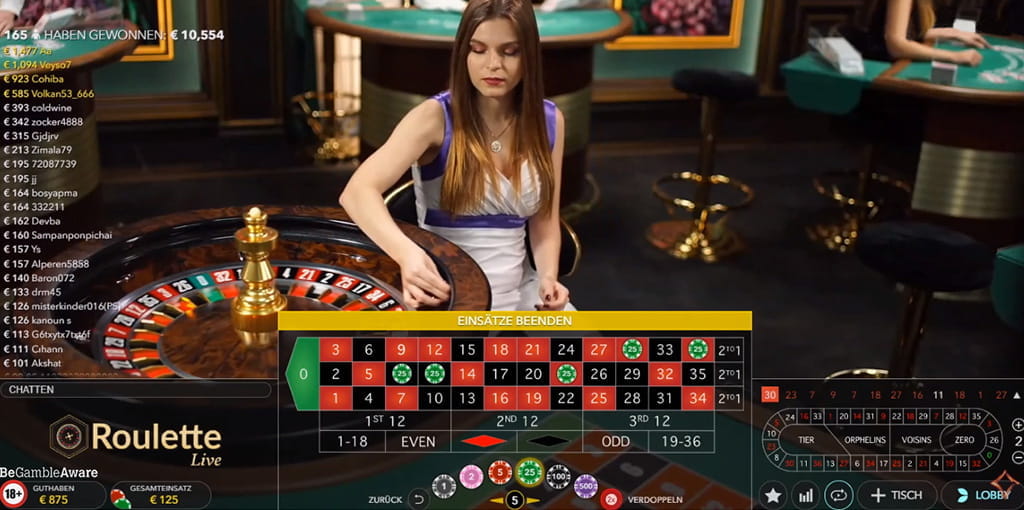
online roulette echtgeld

Alles, was Sie über roulette online echtgeld wissen müssen

Was isch de Unterschid zwüsche europäischem, amerikanischem und französischem Roulette?

Bi europäischem Roulette het s Rad e einzige Null, bi amerikanischem e Null und e Doppelnull, was de Huusvorteil erhöht. Französisches Roulette isch ähnlich wie europäisch, het aber spezielli Regle wie „La Partage“ und „En Prison“, wo de Huusvorteil no witer sänke.

Welchi Wettmöglichkeite gits bim Roulette?

Es git Innewette (z. B. uf eini oder mehreri Zahle) und Ussnewette (z. B. Rot/Schwarz, Groot/Ungroot). Die Innewette zahle hööcher, aber d Gwinnwarschinlichkeit isch chlyner.

sind slots in deutschland legal? 2026 — Rechtliche Grundlagen

Wie wird de Huusvorteil und de RTP (Rückzahligsprozänt) berächnet?

De Huusvorteil isch de statistischi Vorteil vom Casino: bi europäischem Roulette 2,7 %, bi amerikanischem 5,26 %. De RTP isch s Gegestück und beträit 97,3 % respektiv 94,74 %.

Was isch de Unterschied zwüsche Live Roulette und normale Online-Roulette?

Live Roulette wird mit eme echte Dealer per Videostream gspiilt, während normals Online-Roulette e Zuefallsgenerator bruucht. Beidi Variante hai di gliiche Regle, aber Live Roulette bietet es authentischeres Erläbnis.

Welchi Strategie wird Afänger empfohle?

Afänger sötte sich uf Ussnewette konzentriere (z. B. Rot/Schwarz, Groot/Ungroot), wil die e hööcheri Gwinnwarschinlichkeit bi Chline Iisatz bieten. Es isch au wichtig, es Budget feschtzlege und nöd uf Verluscht jage.

Ein wichtiger Faktor bei online roulette echtgeld ist der Kundenservice.

Verantwortungsvolles Roulette-Spielen: Ein Leitfaden für 2026

Glücksspiel ist nur für Erwachsene ab 18 Jahren gestattet. In der Schweiz wird der Glücksspielmarkt durch die Eidgenössische Spielbankenkommission (ESBK) reguliert. Wenn Sie Ihr Spielverhalten einschränken möchten, können Sie das nationale Selbstausschlussregister nutzen. Bei Problemen mit dem Spielen bietet Sucht Schweiz kostenlose und anonyme Beratung unter der Telefonnummer 0800 000 888. Setzen Sie sich persönliche Einzahlungs- und Zeitlimits und betrachten Sie das Spielen stets als Unterhaltung – niemals als Möglichkeit, Verluste zurückzugewinnen.

Über den Autor: . Jonas Becker ist unser Sicherheitsexperte. Seit 20 Jahren prüft er Lizenzen, Verschlüsselung und verantwortungsvolles Spielen in Online-Casinos.